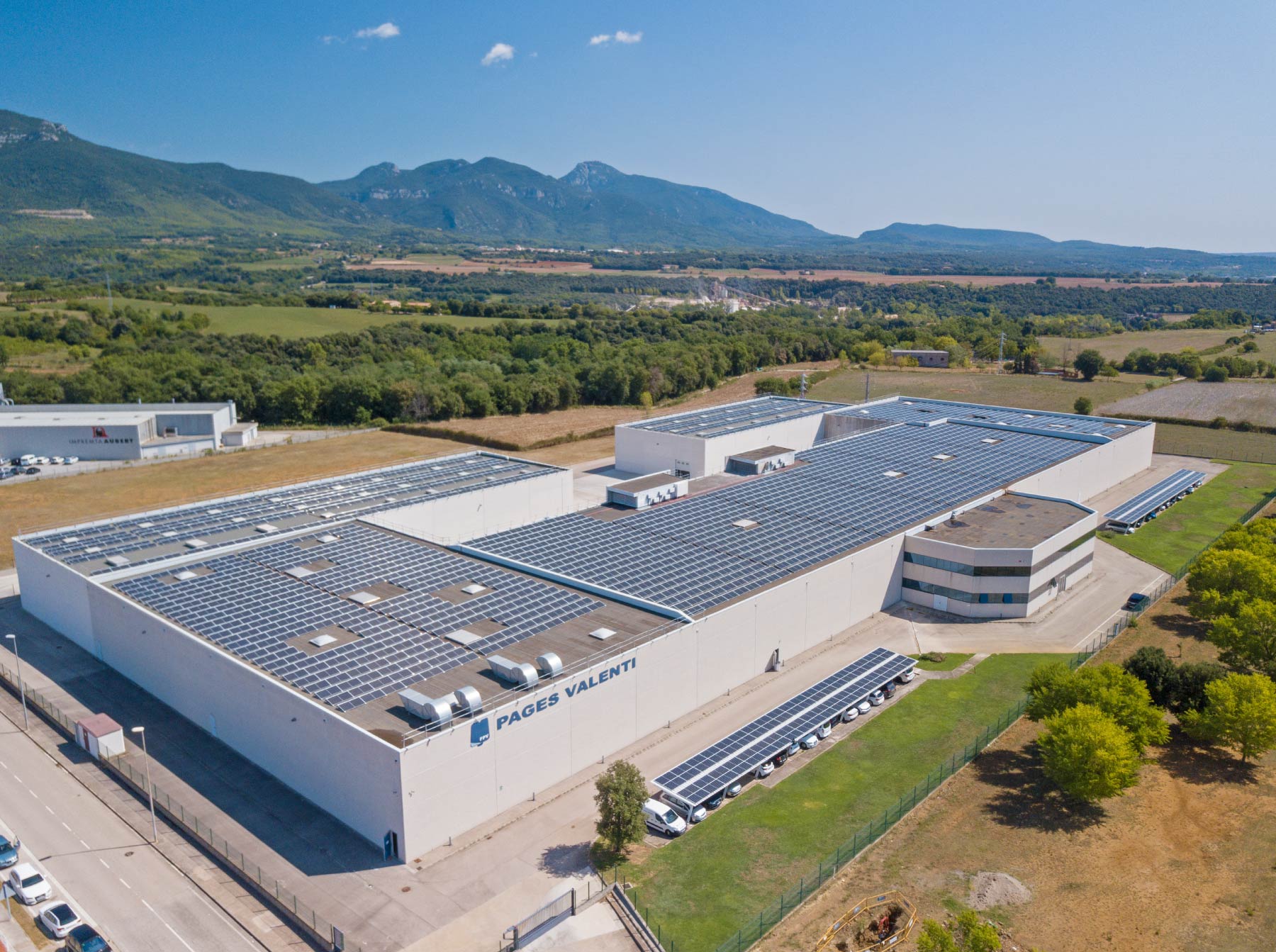
Solar Panels for Businesses and Industrial Buildings

At Fotovol we design and install photovoltaic systems for businesses that reduce their electricity bill in a structural way. We work with high-capacity industrial solar panels, three-phase inverters and solutions with or without storage, adapted to each consumption profile.

We don’t outsource the design. Every installation is analysed internally from a technical and energy standpoint before presenting any proposal. Our savings forecasts are based on conservative estimates, so that reality always exceeds expectations.

We plan execution in phases so that your plant’s activity doesn’t stop. Supply interruptions are coordinated in advance and last only a few hours.

The performance of an industrial photovoltaic installation depends on the rigour of the design. A poorly planned project can produce 20-30% less than expected throughout its entire useful life. These are the technical criteria we apply in every project:

  • Quarter-hourly analysis: Detailed study of load profiles in 15-minute intervals to correctly size the installation, avoid excess power penalties and maximise real self-consumption.
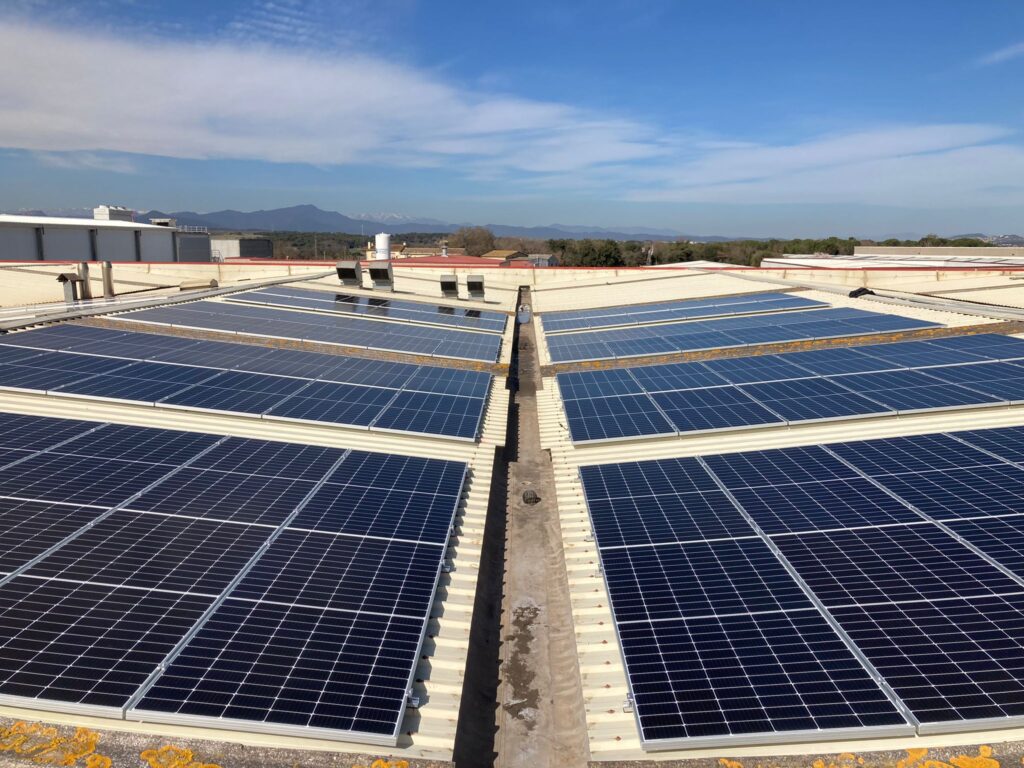
  • Structural load calculation: Technical verification of the load-bearing capacity of sheet metal, sandwich panel or deck roofing against wind and weight. We use fixing systems that preserve the building’s waterproofing and warranty.
  • Industrial-grade components: Inverters with robust topologies, specific protections for aggressive environments and reactive power compensation capability to avoid billing penalties.
  • SCADA monitoring: Full system control with advanced string-level analytics, real-time performance alerts and arc fault detection (AFCI) for maximum safety on industrial rooftops.
  • Zero export management: Dynamic power control systems acting on inverters in milliseconds, ensuring no energy is injected into the grid when regulations or the access contract do not permit it.

An industrial photovoltaic installation is not a cost: it is a financial decision with predictable returns. These are the parameters we analyse in every project:

  • Electricity bill reduction: Depending on the size of the installation and consumption profile, businesses reduce their electricity bill by between 40% and 70%. In installations with storage or high daytime consumption, savings can be even greater.
  • Direct impact on EBITDA: The reduction in energy expenditure improves the operating margin from the first month. For a company with an electricity bill of €100,000/year, a 50% saving means €50,000 annually going directly to the operating result.
  • Real payback periods: Between 5 and 8 years for well-sized industrial installations, counting available grants. After that, the energy generated has virtually zero cost for the 20-25 year useful life of the system.
  • LCOE optimisation: We design the system to minimise the cost per kWh generated over 25 years of useful life, competing directly with wholesale market prices and eliminating exposure to their fluctuations.
  • Protection against electricity market volatility: Fixing part of the energy cost through own generation eliminates exposure to market price increases. In recent years, companies without self-consumption have absorbed increases of up to 200% in their electricity bills.

We analyse which investment model is most profitable for each company:

  • Own CAPEX: Maximum long-term savings, with tax deductions applicable from the first financial year and accelerated depreciation freedom.
  • PPA (Power Purchase Agreement): No upfront investment — the company pays only for the energy consumed at a fixed price below the grid rate. Ideal for companies that prefer to preserve liquidity.

Available grants can reduce the initial investment by between 20% and 65% depending on the type of company, region and project size. We fully manage all grant applications so your finance department only needs to apply them.

    • Next Generation EU grants: Self-consumption incentive programmes covering a significant part of the total cost. SMEs can access up to 45% in non-repayable grants.
    • Energy Saving Certificates (CAE): We manage the CAE process so that measured efficiency translates into additional direct income for your company.
    • Municipal IBI and IAE bonuses: Direct reductions on local taxes depending on the municipality where the installation is carried out.
    • Accelerated depreciation freedom: Investments in renewable energy can benefit from accelerated tax depreciation, reducing the corporate tax base from the first financial year.

Check all specific grants for photovoltaic installations in businesses in our solar panel grants guide.

The modern industrial photovoltaic installation doesn't end at the panels. We design systems prepared for the next level of energy efficiency, integrating storage, thermal hybridisation and participation in flexibility markets.

  • Peak Shaving with BESS batteries: Reduction of demand peaks through large-scale batteries that lower the contracted power term. In companies with high occasional consumption peaks, savings on the power term can be as significant as savings on energy.
  • Hybridisation with industrial aerothermal: Photovoltaic electrical surpluses are converted into thermal energy for washing processes, warehouse climate control or industrial refrigeration. The photovoltaic + aerothermal combination maximises the use of generated energy and simultaneously reduces both the electricity and gas bills.
  • VPP (Virtual Power Plant) readiness: Infrastructures designed to participate in energy flexibility markets and grid adjustment services, generating additional income through intelligent demand management.
  • Modular scalability: All our installations are designed with a long-term vision, with expansion capacity if the company's consumption increases or if storage is incorporated in the future without needing to redesign the system.

Frequently asked questions about industrial photovoltaic installation

How does the installation affect my plant's activity?

We plan execution in phases so that your plant's activity never stops. Critical supply interruptions are coordinated in advance with your production team and last only a few hours. For large-scale installations, we work night shifts or weekends if the client requires it. We deliver the installation fully operational without you having lost a single day of production.

What happens to surplus energy if my factory closes at weekends?

This is a common situation with a technical solution. We analyse the most profitable surplus compensation or grid sale model for your case. If the volume of surplus is high, we design zero export systems or BESS battery integration to store that energy and consume it first thing on Monday morning, maximising real self-consumption and avoiding wasting production.

Who manages the grants and tax deductions?

We do. Grant and subsidy management is part of the service — it is not an extra. We handle the Next Generation grant application, Energy Saving Certificates (CAE), municipal IBI and IAE bonuses, and prepare all the technical documentation for your finance department to correctly apply corporate tax deductions. A single point of contact for the entire process, from the initial study to receipt of the grants.

Tell us about your project

Free quote · No obligation · We respond within 24 hours

Fill in all the fields:

Photovoltaic projects

OTHER SERVICES