
Photovoltaic self-consumption
Save from the very first month: study, installation and legalization.
What is photovoltaic self-consumption and how does it work?
Self-consumption allows you to generate and use your own energy with solar panels.
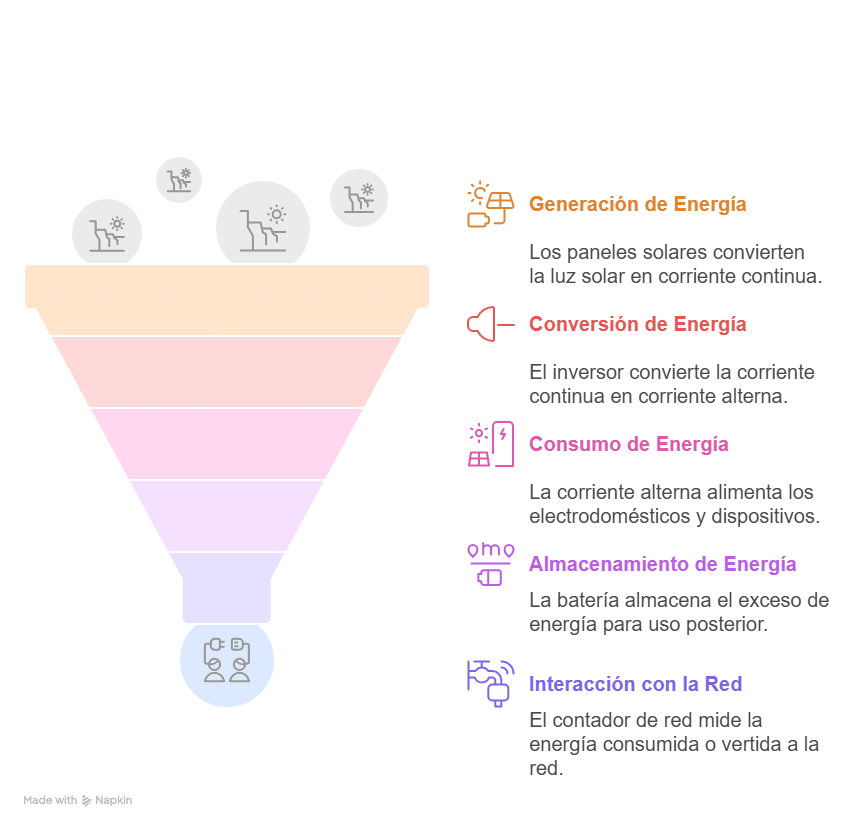
The flow is simple: panels → inverter → loads from your installation → (optional) battery → grid meter.
If there are surpluses, they are compensated for or dumping is avoided with anti-pouring, depending on the modality.
- Hour-by-hour load-consumption curve used for sizing
- Self-consumption without surplus – anti-spill system that prevents injection into the grid
- Self-consumption with surpluses – inject and compensate in invoice
- OCA – inspection by an approved inspection body
- ITB-BT-40 – bt generator standard (anti-islanding, protections)
- PVPC / Free market – electricity contract types and tolls
Types of photovoltaic self-consumption according to use
No surplus (anti-pouring)
Complies with contract and regulations without injecting to the grid, designed for locations with restrictions.
With surplus and compensation
Monetize what you do not consume by studying the necessary power to avoid oversizing the installation.
With batteries
Move kWh to evening/night and cut peaks with greater independence and cost stability.
Isolated and backup
Power where the grid does not reach to provide continuity of service at any location.
Collective (shared)
Distribution by coefficients among several users, whether in communities or industrial estates.
Solar parking
shade + kWh + vehicle recharging option improving magen and parking savings.
| modality | key requirements | when it compensates | common risks | recommended action |
|---|---|---|---|---|
| No overspill (anti-spill) | Certified anti-spill device; anti-islanding test (itc-bt-40); contract without injection; legalization and, if applicable, oca | Premises with spill restriction; daytime consumption with little surplus; projects seeking simplicity | Oversizing and losing production due to curtailment; poor controller adjustment → spot discharges; undocumented testing for OCA. | If there are peaks in the evening, add photovoltaic batteries and a maintenance plan. |
| With surplus and compensation | Compensation contract; bi-directional meter; communication to distribution company; legalization | Stable daytime consumption; compensation close to purchase price; “start without battery, expand later” strategy. | Believing that compensation pays the same as buying → oversizing; contractual conditions (limits/expiration); poorly optimized tariffs | If too much left over at midday, value installing batteries and keep PR high with good maintenance service. |
| With batteries | kW/kWh sizing by load curve; ESS compatible with inverter and BMS; compliant room (ventilation/safety); time-shifting/peak-shaving strategy | Evening/night consumption; expensive peak power; high spread between purchase and compensation; need for back-up | Oversizing kWh and under-utilizing cycles; not modeling degradation/temperature; inverter-battery incompatibilities | Optimal ESS design: battery O&M (firmware, cycling, safety) + maintenance plan. |
| Isolated and backup | Off-grid or hybrid design with genset; inverter/ESS backup mode; battery bank for autonomy; specific protections and grounds. | Off-grid or outage locations; processes with critical continuity (cold, ICT); pumping and remote farms | Running short of autonomy on critical days; not foreseeing start-up peaks; high OPEX due to over-resource. | Tailor-made ESS + critical spare parts. |
| Collective (shared) | Sharing study (fixed/dynamic coefficients); radii/rules in force; agreements between participants; registration with distribution company; remote metering; remote metering. | Nearbycommunities and SMEs; wide coverage for several CUPS; economy of scale objective. | Poorly defined allocation → conflicts; changes in consumption that affect coefficients; slow processing. | Follow-up of distribution with monitoring + O&M – If there are valley surpluses, study batteries in your installation. |
| Solar parking (canopies) | Approved structure and calculation; electrical integration and EV charging option; drainage, lighting and piping; coordination of civil works. | Company/center parking lots with daytime consumption; hot climates (shade + kWh); sustainable corporate image | Underestimate civil works; shadows/obstacles that lower PR; do not foresee scalability to EVs | Recharge peaks controlled with batteries – O&M (cleaning, tightening). |
Sectors of application
The performance of self-consumption depends more on the consumption profile than on the panels. In Spain, the best results come when consumption
Agricultural self-consumption
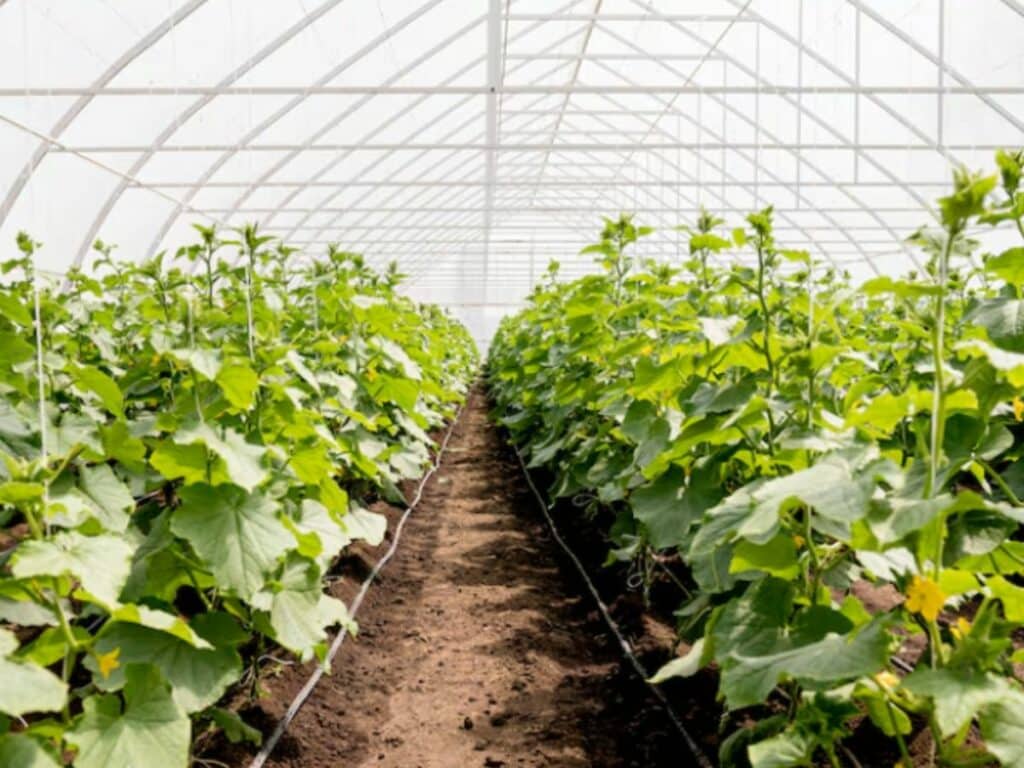
Pumping and irrigation with sun, with designs adapted to the campaign (flow/height) and the possibility of electrical or hydric storage (pond). We integrate pressure/flow control and prioritize direct pumping during solar hours to reduce diesel and costs.
Self-consumption for irrigation
Solar pumping converts the sun into pressurized water and cost stability. Irrigation communities reduce a large part of their electricity costs, gain autonomy from the grid and prices, and operate with minimum maintenance. Ideal for the summer season; compatible with subsidies and financing without initial investment.
Self-consumption for farms
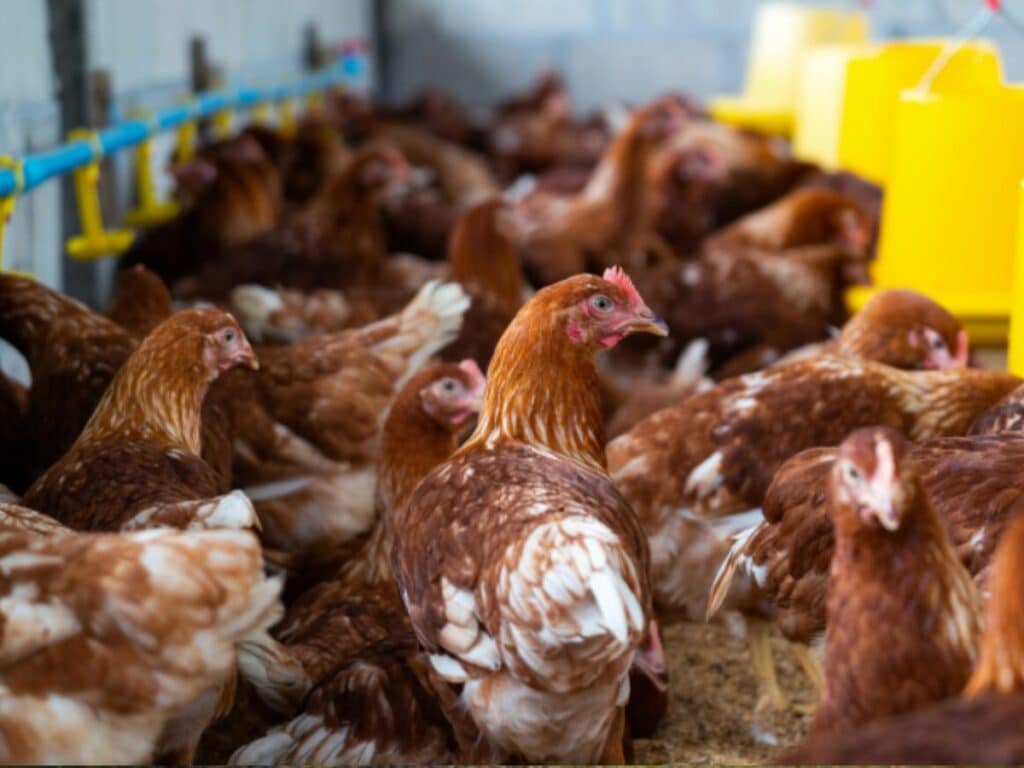
Reduce costs in milking, ventilation, pumping and cooling with solar panels on your farm. We design by load curve and locate on roof or ground to achieve savings of up to 50-70% and greater independence from the grid. Optional: batteries and support for paperwork (REGA, licenses and grants).
Industrial self-consumption
If you work with shifts and peaks in P1-P2, industrial self-consumption allows you to cut the power term (peak-shaving) and shift kWh to expensive hours with or without batteries. We design by load curve to maximize useful self-consumption and ROI, with OCA and paperwork included.

Industrial cooling self-consumption
Chambers and refrigerated warehouses have almost continuous peaks; we combine PV with peak management and, if appropriate, batteries to stabilize contracted power and costs. 24/7 monitoring and O&M to keep PR high on large rooftops.
Self-consumption logistics and transportation
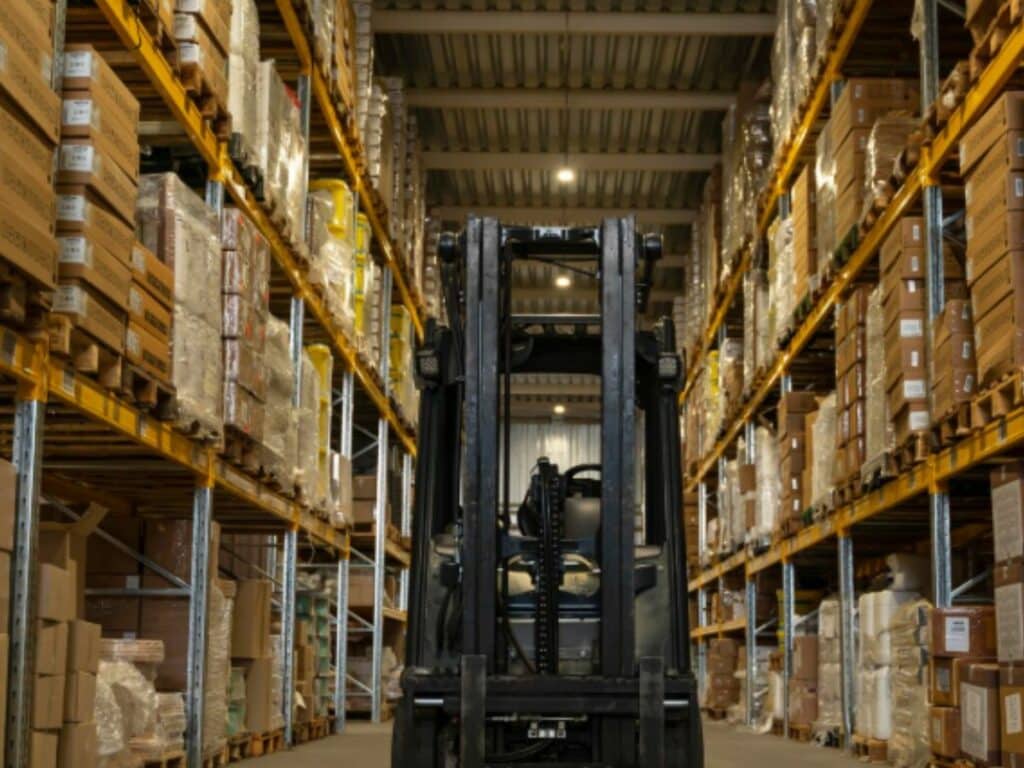
Save on warehouses and transport bases with solar panels. We cover cold chambers, docks and lighting and, with batteries, we do peak-shaving to stabilize power. We integrate forklift loading and electric fleet, works without stopping the operation, legalization and O&M.
Tertiary self-consumption
In stores and offices, consumption is diurnal, perfect for photovoltaics: high coverage without complications and without the need for batteries in many cases. We optimize tariff periods and monitoring to convert the sun into stable savings.

Self-consumption in schools
In educational centers, consumption is mainly diurnal and coincides with the hours of sunshine, so photovoltaics fit without the need for batteries. We design installations on roofs or patio/parking pergolas (useful shade), with security and didactic monitoring to involve students.
We process grants and legalization to ensure stable savings year after year.
Self-consumption in hotels and restaurants
Hotels, restaurants and cafeterias concentrate consumption in air conditioning, DHW, kitchen and laundry. Photovoltaic self-consumption covers the daytime base and, with batteries if appropriate, shifts energy to afternoon/evening peaks.
We reduce costs without affecting customer comfort, integrating PV with boilers/ACS, demand control and monitoring to optimize rates and power.
Other areas of self-consumption
Residential self-consumption
Turnkey installation, careful aesthetics and monitoring app to see your production and savings in real time. If your bill exceeds ~100 €/month, we usually achieve a very high % of self-consumption, with battery option if your peak is at night.
Self-consumption community of owners
Shared self-consumption with transparent distribution by coefficients, legalization and managed subsidies. We design the scheme to maximize the savings in common areas and adhered dwellings, with monitoring of the distribution to avoid surprises.
| sector | pattern of consumption | typical power (reference) | % self-consumption without battery | % with battery | additional focus |
|---|---|---|---|---|---|
| Residential | morning/evening, high winter nights | 3.5-5 kWp per dwelling | 55-70% | 75-90% | surplus/marketing |
| Tertiary (commerce/services) | diurnal stable | 15-50 kWp (SME) | 60-80% | 70-90% | tariff adjustment by periods |
| Industrial | shifts, peaks in P1-P2 | 100-500 kWp | 35-60% | 60-85% | peak-shaving and contracted power |
| Industrial refrigeration and logistics | almost continuous load, compressors | 100-400 kWp | 40-65% | 65-90% | peak shearing + stability |
| Agricultural (irrigation/pumping) | campaigns and solar hours | 10-100 kWp | 60-85% | 70-95% | direct pumping / water storage |
| Communities of owners | common uses + allocations | 10-50 kWp (covered) | 50-75% | 65-90% | distribution and coefficients |
Residential
- profile: early and late consumption; weekends higher.
- typical power: 3.5-5 kWp per single-family house.
- performance: 55-70% without battery; 75-90% with well-dimensioned battery.
- quick wins: shift washers/ACS at midday; optimized overrun compensation.
- risks: oversizing thinking about “0 bill” without battery; shadows of chimneys.
Tertiary (stores, offices, hotels, clinics)
- profile: perfect daytime; weekends variable.
- power: 15-50 kWp (typical SME), scalable.
- performance: 60-80% without battery; 70-90% with battery for short tips/weather.
- quick wins: adjust tariff periods; monitoring to reduce stand-by.
- risks: oversizing in premises with seasonality; failure to review compensation contract.
Industrial
- profile: shifts and peaks (start-ups, furnaces, compressors).
- power: 100-500 kWp (depending on cover and demand).
- performance: 35-60% without battery; 60-85% with battery oriented to peak-shaving and evening/night.
- quick wins: cut contracted power in P1-P2; optimize load sharing.
- risks: ignore start-up peaks in the design; do not assess temperature in battery room.
Industrial refrigeration and logistics
- profile: almost continuous (24/7), compressors and defrosting.
- power: 100-400 kWp.
- performance: 40-65% without battery; 65-90% with battery and peak management.
- quick wins: smoothing compressor ramps; cleaning and PR on large decks.
- risks: not considering nighttime demand; long pipelines with losses.
Agricultural (pumping/wells, farms, chambers)
- profile: for campaigns, many hours in the sun; sometimes nights.
- power: 10-100 kWp (depending on flow rate/height).
- yield: 60-85% without battery; 70-95% with battery or pond (water storage).
- quick wins: direct pumping during daylight hours; automatic pressure/flow control.
- risks: sizing by peak pump power without considering hydraulic curve; dust/aggressive environment.
Communities of owners
- profile: common uses (elevator, lighting, garage) + distributions to dwellings.
- power: 10-50 kWp (depending on cover/availability).
- yield: 50-75% without battery; 65-90% with battery and good distribution.
- quick wins: well-defined coefficients; monitor to adjust common consumptions.
- risks: conflicts due to poorly agreed distribution; licenses/urban development in historic areas.
Do you want your real figures by sector (self-consumption, surplus, power and payback)? We do the study by load curve and give you the winning scenario.
Savings and advantages of having photovoltaic energy
In Spain, savings come in three ways:
- Energy not purchased: each kWh you produce and consume avoids paying the price of your tariff (energy term with its tolls and taxes).
- Surplus: if your modality is with surplus, the kWh you pour are compensated in invoice (according to RD 244/2019, usually for powers ≤100 kW). The compensation is usually lower than the purchase price, that is why we size for self-consumption rather than dumping.
- Contracted power: in SMEs/industry you can reduce peak demand with batteries and management (peak-shaving) and adjust power term by periods (P1-P6) in 3.x/6.x contracts, generating a second block of savings.
Key advantages of self-consumption (in our market)
- Immediate savings: you cut your energy bill from the first month.
- Less exposure to increases: stabilizes your average cost per kWh in the long term.
- Power optimization (companies): less penalties and contracted power more adjusted by periods.
- More independence: with battery, you cover dusk/night and microcuts (depending on equipment).
- Sustainability and branding: you reduce CO₂ and improve the energy rating of the asset.
- Monitoring: real-time control of production, consumption and surpluses for further improvement.
| approach | investment | % typical self-consumption | where it shines |
|---|---|---|---|
| No battery | low-medium | 45-70% | daytime consumption, low nighttime demand |
| With battery | medium-high | 75-90% | evening/night and expensive peaks |
| Hybrid (battery + surplus) | average | 65-85% + power reduction | industry/tertiary with peaks |
Residential
- profile: early and late consumption; weekends higher.
- typical power: 3.5-5 kWp per single-family house.
- performance: 55-70% without battery; 75-90% with well-dimensioned battery.
- quick wins: shift washers/ACS at midday; optimized overrun compensation.
- risks: oversizing thinking about “0 bill” without battery; shadows of chimneys.
Tertiary (stores, offices, hotels, clinics)
- profile: perfect daytime; weekends variable.
- power: 15-50 kWp (typical SME), scalable.
- performance: 60-80% without battery; 70-90% with battery for short tips/weather.
- quick wins: adjust tariff periods; monitoring to reduce stand-by.
- risks: oversizing in premises with seasonality; failure to review compensation contract.
Industrial
- profile: shifts and peaks (start-ups, furnaces, compressors).
- power: 100-500 kWp (depending on cover and demand).
- performance: 35-60% without battery; 60-85% with battery oriented to peak-shaving and evening/night.
- quick wins: cut contracted power in P1-P2; optimize load sharing.
- risks: ignore start-up peaks in the design; do not assess temperature in battery room.
Industrial refrigeration and logistics
- profile: almost continuous (24/7), compressors and defrosting.
- power: 100-400 kWp.
- performance: 40-65% without battery; 65-90% with battery and peak management.
- quick wins: smoothing compressor ramps; cleaning and PR on large decks.
- risks: not considering nighttime demand; long pipelines with losses.
Agricultural (pumping/wells, farms, chambers)
- profile: for campaigns, many hours in the sun; sometimes nights.
- power: 10-100 kWp (depending on flow rate/height).
- yield: 60-85% without battery; 70-95% with battery or pond (water storage).
- quick wins: direct pumping during daylight hours; automatic pressure/flow control.
- risks: sizing by peak pump power without considering hydraulic curve; dust/aggressive environment.
Communities of owners
- profile: common uses (elevator, lighting, garage) + distributions to dwellings.
- power: 10-50 kWp (depending on cover/availability).
- yield: 50-75% without battery; 65-90% with battery and good distribution.
- quick wins: well-defined coefficients; monitor to adjust common consumptions.
- risks: conflicts due to poorly agreed distribution; licenses/urban development in historic areas.
In Spain, the spread (what you pay per kWh vs. what you are compensated by the supplier) is usually significant; that is why we prioritize useful self-consumption and, when there are peaks or evening consumption, we propose a battery to increase the useful % and reduce power. When consumption is diurnal and stable, the surplus mode works very well without oversizing.
Fotovol
Legal implications
In Spain, a self-consumption installation touches on three legal fronts:
- Municipal town planning (license or responsible declaration);
- Electrical safety (REBT/ITC-BT and OCA inspections when applicable);
- Connection and compensation (RD 244/2019, distributor and marketer).
1) Town planning: license vs. responsible declaration
- Roofs and facades: many cities allow responsible declaration for roof panels; in historic centers, BIC or if there is a substantial modification of the structure, a license and authorization from heritage may be required.
- Structure and setbacks: respect alignments, heights and collective protections (handrails, life lines).
- Civil works (canopies, parking lots): usually require a project and license.
tip fotovol: always consult local ordinances and require a prior urban planning report.
–> Municipal doubts? we take care of the paperwork and legalization for you.
2) Electrical safety: applicable rebt and itc-bt
- itc-bt-40 (generating installations): connection diagram, anti-islanding, isolation, dc/ac and earth protections.
- Antiverting (without surplus): certified equipment, integration with inverter and documented testing.
- Mandatory measurements: continuity, insulation, ground, differential tripping, overvoltage verification (SPD) and selectivity.
- Documentation: project or technical report, CIE/bulletin and maintenance manual.
3) OCA: when applicable
- High voltage (HV): there is always an OCA inspection (initial and periodic).
- Low voltage (LV): requires initial inspection and then every 5 years when certain assumptions are met (power, use, public concurrence…). In LV PV, many Autonomous Communities require OCA from ~25-100 kW (indicative criteria; confirm in your community). If there was an initial OCA, plan the periodic OCA in your maintenance plan.
–> We manage OCA inspections and pre-audits.
4) Connection, surplus and compensation (RD 244/2019).
- No surplus: you need an access contract without injection and certified anti-pouring.
- With surplus and simplified compensation: typically applicable to ≤100 kW in LV. Requires a compensation contract with the retailer, bidirectional meter and communication to the distributor.
- >100 kW (or HV): in general, there is no simplified compensation; the sale of energy (market representation) is processed.
- Collective: agreement on the distribution of coefficients (fixed or dynamic according to current regulations) and registration of all CUPS with the distributor.
- City Hall: license or responsible declaration.
- Regional industry: registration/commissioning and, if applicable, OCA.
- Distributor: access/connection, metering points, self-consumption registrations and, if applicable, distribution.
- Commercialization company: surplus compensation contract (when applicable).
- Installation/engineering: project/memory, CIE, tests, anti-spill/anti-islanding integration and delivery of dossier.
- Holder: maintain the facility and keep documentation and records.
- Project or technical report + dc/ac single-line diagram.
- Sheets: modules, inverters, protections, SPD, anti-switching.
- Measurement reports: ground, continuity, insulation, differential, anti-islanding/anti-islanding test.
- CIE/bulletin and installation certificates.
- Contracts: access/connection, compensation (if applicable), sharing agreement (collective).
- Maintenance book and O&M plan.
- Sizing without load curve → useless surplus or unpermitted discharges.
- Poorly parameterized antiverting (punctual injection peaks).
- Failure to provide for SPD or selectivity → nonconformities in OCA.
- Misallocation of coefficients in collective → conflicts and rework of procedures.
- Forgetting heritage/urbanism in historic districts.
- Failure to align meter/measuring points with the requirements of the distribution company.
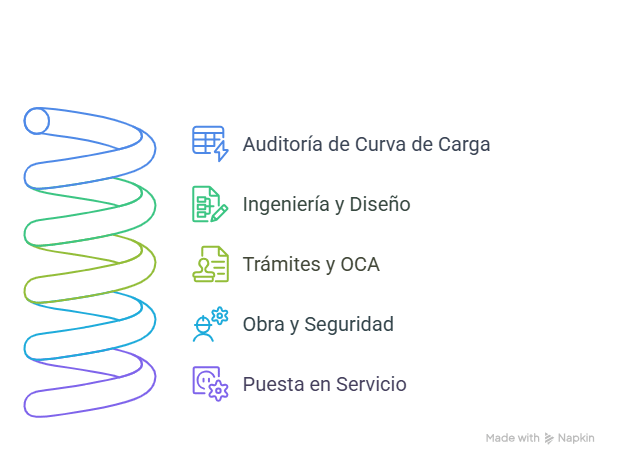
How we work
From start to finish, we do it turnkey and with clear metrics. We start from your load curve to design the optimum (not the maximum), we take care of engineering, paperwork and OCA, we execute the work safely and we leave the plant legalized and monitored.
From there, we follow up with you with maintenance and performance targets (PR, % self-consumption and savings) that you can see in real time.
How much it costs and how much it saves
How we calculate ROI
We dimension by load curve to maximize useful self-consumption and avoid oversizing.
The return comes from:
- Unpurchased energy (kWh you no longer pay for),
- Compensated surpluses (if applicable),
- Reduction of contracted power (in SMEs/industry with batteries/peak management).
- Indicative ranges by segment
Quick formula (indicative):
Annual savings ≈ kWh self-consumed × price_kWh + kWh compensated × price_compensation + power savings (€/kW-year)
| segment | typical power | investment approx. | % self-consumption without battery | % with battery | typical payback |
|---|---|---|---|---|---|
| residential | 3.5-5 kWp | 4.000 – 9.000 € | 55-70% | 75-90% | 3-7 years |
| tertiary (sme) | 15-50 kWp | 12.000 – 45.000 € | 60-80% | 70-90% | 3-7 years |
| industrial | 100-500 kWp | 69.000 – 280.000€ | 35-60% | 60-85% (+ power reduction) | 2-4 years |
| agricultural (pumping) | 10-100 kWp | 11.000 -69.000 € | 60-85% | 70-95% | 2 – 7 years |
Real cases
Residential (without battery vs. with battery)
Consumption: 6,000 kWh/year – average price: 0.14 €/kWh
System 4 kWp → production ≈ 6,400 kWh/yr.
Without battery (self-consumption 60% / compensation 15% at 0.05 €):
savings ≈ 1058 €/year
With battery (self-consumption 80% / compensation 5%):
savings ≈ 1436 €/year
Difference: +378 €/year; value the extra CAPEX of the battery to see if it compensates in your case.
SME/Tertiary (with soft peaks)
Consumption: 90.000 kWh/year – average price: 0,14 €/kWh
System 30 kWp → production ≈ 40,700 kWh/yr.
Without battery (self-consumption 70% / compensation 10% at 0.05 €):
savings ≈ 2822 €/year
With battery (self-consumption 85% / compensation 5%):
savings ≈ €3,365 (extra savings €543/year; check CAPEX battery)
Industrial (battery for peaks)
consumption: 1,200 MWh/year – tariff 6 periods
PV 300 kWp → production ≈ 480 MWh/yr.
battery 250 kW / 500 kWh → peak-shaving 150 kW in P1-P2
Energy savings (self-consumption 55%): 42-50 k€ /year
Power savings (150 kW in P1-P2): 8-15 k€ /year (depending on prices)
Estimated total savings: 50-65 k€ /year (+ O&M, + degradation contemplated in NPV)
What drives payback (levers)
- Matching sun/consumption (better in daytime).
- Spread purchase vs. compensation (the higher, the more interesting to self-consume or add battery).
- Peak power (industry): big impact if you cut them.
- Shadows/orientation and PR (maintenance).
- Price of equipment and civil works/structures.
Grants for photovoltaic self-consumption
We take care of detecting, requesting and justifying the applicable subsidies for your project and making them compatible with local deductions and bonuses. We tell you from the beginning which line is right for you and we reserve the deadlines.
common types of aid (spanish overview)
regional programs for self-consumption and storage
Periodic calls for proposals managed by the Autonomous Regions. They cover a % of the CAPEX (equipment/work) and, sometimes, storage.
municipal bonuses
IBI: Temporary allowance (e.g., 25-50% for several years) according to local ordinance.
ICIO: reduction of the construction tax.
licenses: in many municipalities a responsible declaration is sufficient.
tax deductions
housing: possible deductions for energy efficiency improvements.
company: accelerated depreciation or sectoral regional incentives.
financing
On-site PPAs (no initial investment, payment per kWh).
credit/leasing lines (public or bank), sometimes subsidized.
energy communities/collective self-consumption
Specific support for shared projects (according to call).
- Regional programs for self-consumption and storage: Periodic calls for proposals managed by the Autonomous Regions. They cover a % of the CAPEX (equipment/work) and, sometimes, storage.
- Municipal bonuses
- IBI: Temporary allowance (e.g., 25-50% for several years) according to local ordinance.
- ICIO: reduction of the construction tax.
- Licenses: in many municipalities a responsible declaration is sufficient.
- Tax deductions
- housing: possible deductions for energy efficiency improvements.
- company: accelerated depreciation or sectoral regional incentives.
- Financing
- On-site PPAs (no initial investment, payment per kWh).
- Lines of credit/leasing (public or bank), sometimes subsidized.
- Energy communities/collective self-consumption: Specific support for shared projects (according to call).
- Detailed project/memory and budget.
- Certificates of installation, legalization and, if applicable, OCA.
- Proof of ownership of the property or right of use.
- Technical and economic justification and execution reports.
- Pre-check of applicable subsidies by Autonomous Community/municipality.
- Reserve funds/application (when required by the line).
- Execution and legalization with justification milestones.
- Collection and closing of the file.
Frequently asked questions about photovoltaic self-consumption
Do I need batteries to be profitable?
Not always. If your consumption is daytime (tertiary/SME), self-consumption without battery already achieves 55-80% coverage. Batteries compensate when you have peaks at dusk/night, you want to cut power (peak-shaving) or you are looking for more independence. We decide with your load curve.
How long does installation and legalization take?
The work in single-family homes usually takes 1-3 days; in SMEs/industry, from several days to a few weeks depending on size and civil works. Legalization (paperwork with industry, distributor and, if applicable, subsidies) depends on each Autonomous Region and distributor. We give you a chronogram with milestones and dates from the beginning.
When do I need OCA?
In High Voltage, always. In Low Voltage, the OCA inspection is mandatory when certain assumptions are met (power/use/activity). In LV industrial photovoltaic, many Autonomous Regions require it from ~25-100 kW. If there was an initial OCA, the periodic OCA will be every 5 years. We prepare the pre-audit and manage the visit.
Which company pays best for self-consumption surpluses? V
There is no “best” for everyone. It depends on whether you are compensated fixed price for surplus, indexed price (PVPC/free) and if you use virtual battery. Today you can see three useful references:
- Naturgy publishes 0.07 €/kWh (excluding VAT) for surpluses in its solar tariff.
- In PVPC (regulated) the price is variable per hour; today’s average is around ~0.109 €/kWh, with better and worse hours.
- Comparators (Selectra/Kelisto) change every month the “top” between offers with virtual battery and fixed/indexed plans; check them for the current month.